Imam Hussain(a.s) Brief History

No more than 60 years had passed since the death of Muhammad (the last prophet of Islam), and the Muslim Empire was sliding into corruption under a tyrant from the Ummayad dynasty, Yazid
Hussain ibn Ali, the grandson of Prophet Muhammad took a stand against Yazid’s illegitimate rule. Whilst Yazid was in equal parts feared and despised for his ruthlessness, Hussain was admired and respected by society at large. Mindful of this, Yazid decided that he would demand Hussain’s allegiance, hoping to gain some form of legitimacy for his inherited rule
Hussain’s stand
Hussain had a choice to make. To endorse Yazid would no doubt mean a handsome reward and a life of luxury. To refuse would invariably lead to his own demise. What should he do? What would you or I do? For Hussain the choice between the easy way and the right way was no choice at all. Hussain refused. He said:
I will never give Yazid my hand like a man who has been humiliated, nor will I flee like a slave… I have not risen to spread evil or to show off…
Rather, I have left to restore the teachings of my grandfather Muhammad… And I only desire to enjoin good values and prevent evil…

Hussain was a man of great love and compassion
Despite cultural expectations of him as a ‘prince’ of his tribe and a prominent figure in the Islamic Empire, Hussain would shun the grandeur of his status in favour of breaking bread with the poor and needy. He broke all cultural moulds, brought people together and helped where he could. A celebrated example was when he and his brother Hassan cared tirelessly for a poor blind man they came upon in their city, in spite of traditional social expectations.
Not long after the passing of Muhammad, the leadership of the vast Islamic Empire had fallen into the hands of the corrupt. The good values that Muhammad had spent his life instilling into society was slowly eradicated as the new ruler, Yazid, from the Ummayad dynasty was determined to gain complete control.
Hussain made a selfless stand for social justice
Hussain witnessed the fundamental human rights of his fellow citizens being usurped and the morality from his society being drained under Yazid’s rule. He knew something had to be done.
Yazid ruled with an iron fist and demanded Hussain pay him an oath of allegiance, to lend credibility to his rule or be killed. It was here Hussain faced his dilemma… Should he give his oath of allegiance to a tyrant – and stand aside as the people around him were being oppressed? Or should he make a stand and risk great personal loss?
The timeless words of his grandfather Muhammad echoed in his heart, and Hussain knew what he had to do: “The greatest stand is to speak the word of truth in the face of a tyrant.”
Hussain made the ultimate sacrifice
Hussain chose to take a stand against Yazid and was forced to leave his home city under the threat of assassination by Yazid’s men. Alongwith his family and loyal companions, Hussain made his way towards the East in an attempt to avoid and violence. It was on this journey Hussain, his family and companions were forced to stop by an army of over 30,000, on the hot plains of a land called Karbala.
Hussain chose to take what was the macrocosm of his life and demonstrate it in a single act of extraordinary devotion. In 680 AD, after three days of no water and food in the scorching heat on the deserts of modern day Iraq, Hussain stood and fell valiantly to defend those around him being oppressed and whilst standing for his principles. What’s all the more extraordinary is Hussain chose to stand against this mammoth army despite having only 72 companions with him.
Hussain’s legacy of compassion and integrity lives on
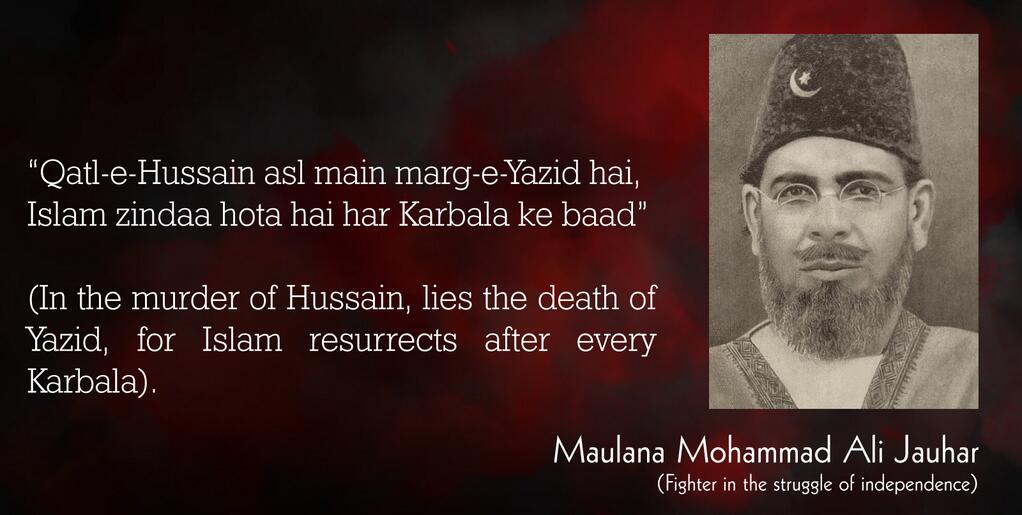
Through this tragic end but heroic act of sacrifice, Hussain inspired millions around the world. His legacy is that despite being killed for what he stood for, ultimately he was victorious as his death became the catalyst for changes and led to the collapse of Yazid’s tyrannic rule.
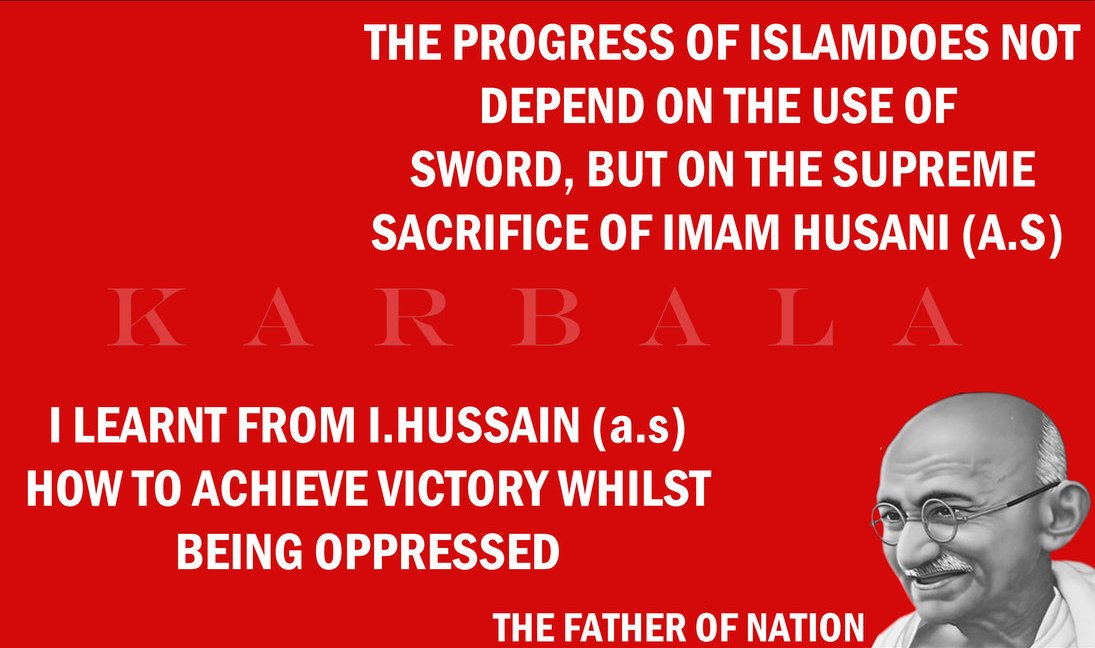
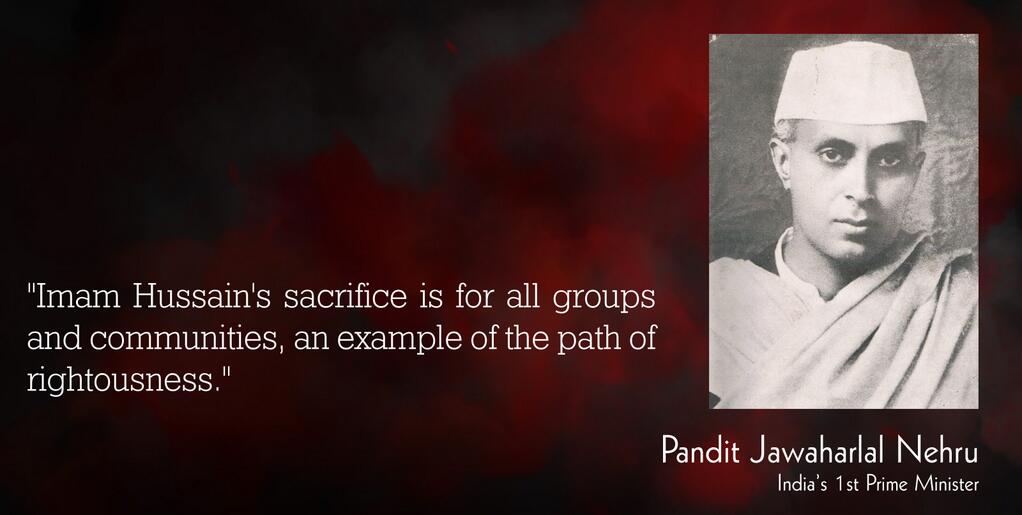
From people who volunteer at their local charities to civil rights leaders like Gandhi, millions of people across the world are inspired by his selflessness, courage and determination. The story of Hussain ibn Ali stands as an inspiration to all, no matter what colour or creed.
This campaign is simply that; not about personal beliefs or social class. It is about our collective humanity, our common causes towards goodness, and the prospect of the beautiful world that’s within our grasp, if each of us were to give back what little we can.
Karbala the cruelest tragedy humanity has ever seen
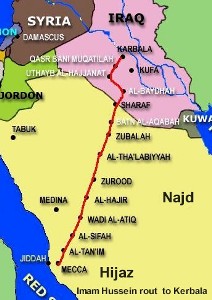
The journey from Mecca to Kufa
His life now under threat, Hussain decided to move himself and his family to Mecca in the hope that Yazid’s agents would respect the holy city. As he waited, pondering his next move, messages of support began to arrive from across the empire. He left for Kufa, a city in modern day Iraq, but en route, he was intercepted by a battalion of government soldiers, who blocked Hussain and his supporters from going towards Kufa and instead forcibly diverted towards the desert town of Karbala.
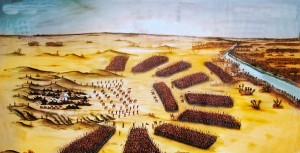
Once they reached Karbala, government forces surrounded their small band and blocked their access to the water supply. With both camps stationed at Karbala, a stalemate ensued. Hussain had made it clear that he could not, and would not, bow to Yazid. The opposing forces of 30,000 soldiers, which vastly outnumbered Hussain’s small band of seventy-two men and their families, were under strict orders not to let Hussain leave, but at the same time were loath to kill a man whose status and reputation they were well aware of.
After a week, word reached Hussain that Yazid had sent orders that he was not to be allowed to leave Karbala until he had taken an oath of allegiance. The end was drawing close.
The final night
That night Hussain assembled his group, stressing to them that it was his life that Yazid wanted and that they might be able to escape. Again, Hussain’s selflessness shone through. There he stood, amongst his family and companions, all having been deprived of water in the scorching desert for three days, pleading with them to leave him and save themselves!
After a few days of this stalemate, the government forces were commanded to attack and kill Hussain and his companions. Hussain’s men were vastly outnumbered. One by one, they were killed, and the government forces massed around Hussain, eventually killing him.
‘Death with dignity is better than a life of humiliation’
After his death, the women and children from Hussain’s party were taken captive. His sister, Zainab, took up the mantle of leadership of the small band, and gave speech after speech condemning the actions of Yazid and his government, culminating in a confrontation in the ruler’s own court. Zainab was perhaps the first person to be inspired by Hussain’s stand, using it as a catalyst for change. She refused to be subdued and put her fear to one side so she could hold to account those responsible for the moral decay of society.
Despite the pervasive sexism of society at the time, Zainab managed to lead and inspire both men and women. Hussain’s example, that one man can stand alone against an army of thousands, inspired her to the point where she castigated and berated a murderous dictator in his own palace, laying the foundations for the eventual overthrow of the Ummayid dynasty.
Today millions of people pay homage to Hussain ibn Ali for his stand and annually mourn the tragic Battle of Karbala in which Hussain, his family and loyal companions were brutally killed one by one. Pilgrims from all walks of life visit the Imam Hussain shrine to pay their respects in the city of Karbala, Iraq,